



Leather
A Beginner’s Guide to Suede Shoes vs Leather Shoes
Key Points
- Main Difference Between Suede and Leather
- A Simple Buying Checklist
- Common Mistakes To Avoid
You’re out shopping and find a nice pair of suede shoes. And then you see a shopper wearing leather shoes and now you’re back to square one. Not sure what you should do. And honestly, you’re not the only one. Suede shoes vs leather shoes can feel like making a really big life decision.
That’s because both look good in their own way.
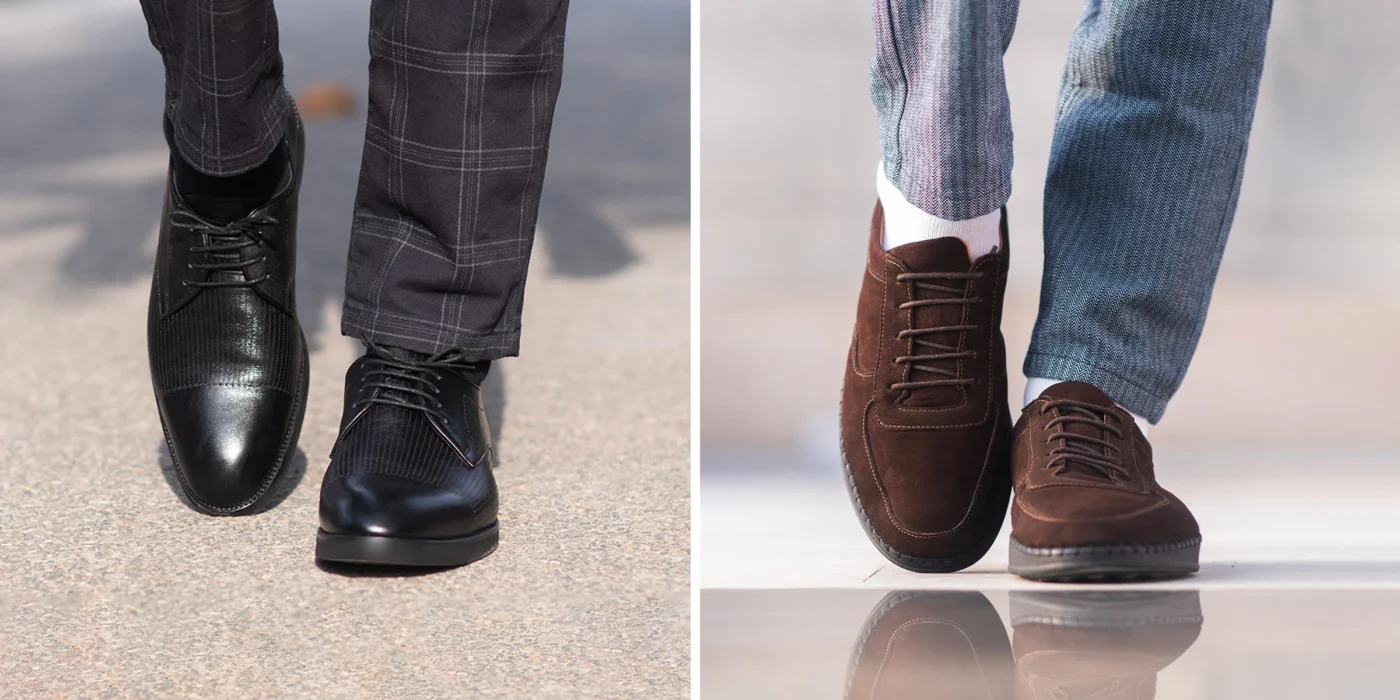
Suede is soft and velvety and gives off a relaxed yet put-together vibe. Leather, on the other hand, is smooth and polished and works for everyday outfits. Both are great choices; they just suit different needs.
But don’t get confused. Start with your lifestyle. Look at your style, what type of shoes you normally wear, check the weather and how much you want to care for your kicks. Once you have these things sorted out, choosing to buy suede or leather shoes becomes much easier.
Let’s go over this to help you understand better.
First, What Is the Main Difference Between Suede and Leather Footwear?
A small plot twist: suede is leather too.
The core difference is the part of the hide and how it’s finished. Smooth leather has a sleek outer surface, and suede has a soft, napped texture. Its fuzzy texture has a subtle appeal that doesn’t need to shine to command attention.
Here is the simple version:
Feature | Leather | Suede |
Feel | Firm and smooth | Soft and velvety |
Look | Polished and clean | Matte and textured |
Formality | Usually more formal | Usually more relaxed |
Rain | Handles light moisture better | More sensitive to moisture |
Care | Conditioning and polishing | Brushing and protection |
Best setting | Office, formal events, daily wear | Smart-casual, dinners, social events |
Style effect | Sharp and refined | Soft and stylish |
The table above on the differences between suede and leather footwear is more useful than simply calling one better than the other.
Read more about suede vs leather here.
The Polished All-Rounder

Leather shoes work well when you want your footwear to look neat and put together.
Think leather Derby or Oxford. They handle formal settings pretty well. Darker shades can also work well with business clothing. Warm brown colors fall towards the casual side without losing that polished feel.
Leather has another advantage. As it gets older, it develops a character: patina. Besides, small marks can often be cleaned, conditioned or polished. With good care, quality leather can stay in rotation for years.
That makes leather useful when one pair needs to do several jobs.
Leather makes sense when you want:
- Sharper appearance
- A shoe for business clothing
- Easier surface cleaning
- More freedom in damp weather
- A pair you plan to wear regularly
- Material that can develop a patina over time
TidBit: There is also a comfort change with leather. It may feel firmer when new, then soften and shape around your foot as you wear it.
The Dreamy Texture

It’s a charmer!
Suede shoes do not need a glossy finish to look special. The soft nap gives it depth and a relaxed kind of luxury. A brown suede loafer can instantly make you look good without much effort.
That makes suede especially useful when polished leather feels a little too formal.
It works nicely with:
- Chinos
- Dark or light denim
- Tailored casual trousers
- Knit polos
- Oxford shirts
- Soft blazers
- Weekend outfits
One thing to keep in mind is that suede is not quite the fragile little creature people sometimes think. In fact, it can be surprisingly resilient. The bigger issue is that its surface reacts differently to dirt, moisture and scuffs, so the care routine matters.
Warning: Avoid treating every suede shoe exactly the same. Waxed suede, different suede types, finishes and construction can change how the material should be cleaned.
Suede Shoes vs Leather Shoes in Rain
Now, here it all gets serious. Although both can be affected by moisture, leather usually gives you more breathing room than suede. Light rain is usually fine, especially when the footwear has been properly protected. Suede is more likely to show water marks or changes in its nap when it gets soaked.
That does not mean every drop of water destroys suede.
Since different suede shoes react differently, you can wear certain types regularly in the rain while others you can’t. It’s all about material, finish, treatment, and the amount of water; all matter.
So, think about your normal day.
If your commute includes wet pavements, sudden showers, or long walks outside, leather can make those days easier.
Suede is a better choice when you mostly experience dry evenings, indoor events or clear-weather days.
Suede Shoes Care vs Leather: What Actually Changes?

The care and maintenance routines are different, but neither needs to become a weekly chore,
For leather:
- Brush away dust.
- Wipe off surface grime and dirt.
- Use a suitable conditioner when needed.
- Polish when you want to refresh the finish.
- Let the shoes dry naturally if they get damp.
For suede:
- Use a proper suede brush.
- Let wet dirt dry before brushing.
- Use a suede eraser for certain marks.
- Apply a suitable protector before regular wear.
- Keep the pair away from prolonged soaking.
Bonus tip: Do not use regular leather polish for suede. The two surfaces need different products.
Now, let’s talk a little about suede shoes durability.
Is Suede Really Less Durable?
This is one of the most asked questions in the leather vs suede community.
Smooth leather often has an advantage. It’s good for heavy daily use because its surface is dense and better suited to repeated scuffs and wear. But saying “suede always wears out faster” is too broad.
Yes, the type of suede matters. And so do the hide, thickness, tanning, construction, sole and how the shoes are used.
So instead of asking only about the material, check the whole shoe.
Look at:
- Upper quality
- Stitching
- Sole construction
- Heel attachment
- Lining
- Leather or suede thickness
- How often you will wear them
Fact: The sole may wear out sooner than the upper material. Even an excellent upper cannot save a shoe from poor construction.
Best Shoe Material: Suede or Leather for Different Occasions
Instead of choosing one material for everything, match the shoe to the job.
Occasion | Material to Consider | Why |
Job interview | Leather | Clean and formal |
Business meeting | Leather | Sharp and polished |
Black-tie event | Leather | Better for formal dress |
Dinner date | Suede or leather | Depends on the outfit |
Weekend brunch | Suede | Relaxed texture |
Smart-casual party | Suede | Adds visual interest |
Rainy commute | Leather | More forgiving |
Dry summer evening | Suede | Soft, lighter visual feel |
Everyday office | Leather | Easy to dress up |
Casual denim outfit | Suede | Adds texture |
All in all, there’s no single best shoe material suede or leather for you. Your wardrobe and lifestyle should make the final call.
A Simple Buying Checklist
Before paying for either material, check these things:
Look Beyond the Material
“Leather” alone does not tell you everything about a shoe. Check the quality, construction, sole, lining and finishing.
Think About Your Weather
Suede works well in drier weather. Frequent rain calls for more caution.
Match the Shoe to Your Clothes
If most of your wardrobe is suits and tailored trousers, polished leather makes sense.
Suede may fit more naturally if you wear chinos, denim, knitwear and relaxed trousers.
Check the Care Routine
If you hate maintaining shoes, do not buy a material that will annoy you every time it gets dirty.
Think About Wear Frequency
A shoe worn twice a month has a very different job from one worn five days a week.
Common Mistakes To Avoid
Here are a few mistakes people usually make when buying leather or suede shoes.
Mistake 1: Treating suede as waterproof.
Even after applying a protector, suede does not become waterproof.
Mistake 2: Treating all leather as equally durable.
Leather quality and construction make a big difference.
Mistake 3: Buying only for appearance.
A beautiful shoe can look good inside your wardrobe more than on your feet.
Mistake 4: Using the wrong cleaning product.
Suede and smooth leather need different care methods.
Mistake 5: Wearing one pair every day.
Regular rotation gives footwear time to dry and recover between wears.
FAQs
Is suede actually leather?
Yes. Suede is a type of leather, but its soft surface comes from the underside or split side of the hide. Plus, it is finished differently from smooth leather, which gives it its fuzzy texture and matte appearance.
Which is easier to maintain, suede or leather?
It varies from person to person. Leather asks for conditioning and polishing, while suede asks for brushing and protection. So it all comes down to what you like and dislike.
Can I wear suede shoes in summer?
Yes. Suede shoes can work well in summer because their soft texture pairs nicely with lighter clothing. Weather still matters, though. A dry summer evening is very different from a sudden downpour.


