


Leather
Top Grain vs Full Grain Leather: What’s the Difference?
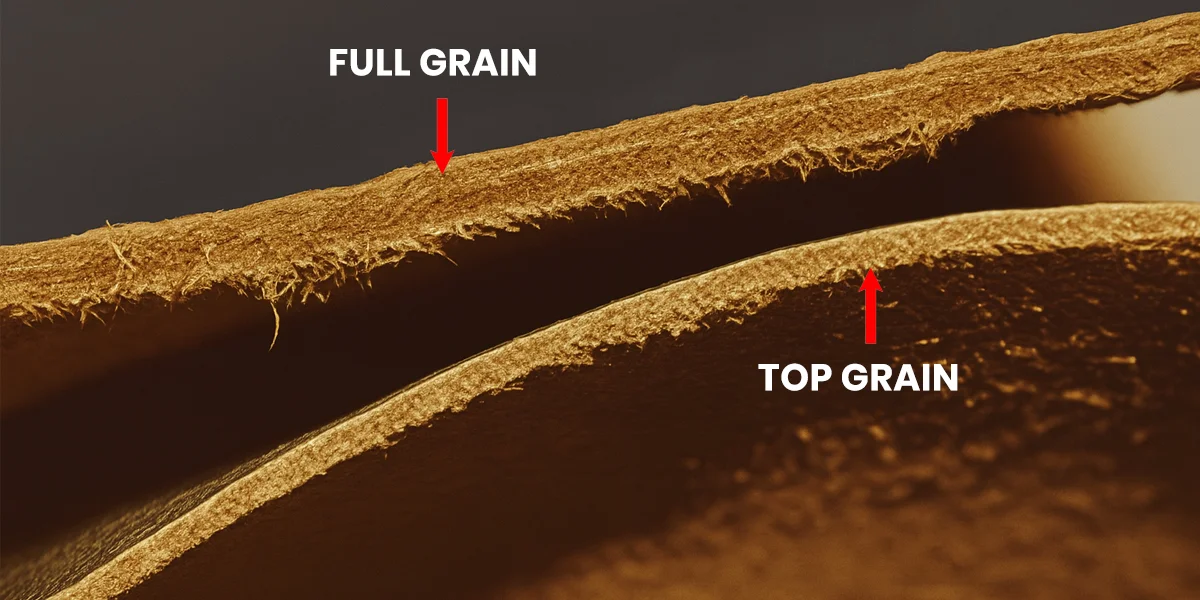
Leather is a popular material; this is why, when learning about types, you may get confused. Especially when you’re trying to understand the difference in quality, texture, and usage between top grain vs full grain leather, that’s because both of them have exceptional qualities. Plus, unique features that make each one perfect for different things.
Knowing what distinguishes them helps you understand the clothing item when going shopping, such as men’s and women’s leather jackets, shoes, or any. Although it seems tricky at first, by the end of this mini guide, everything will make sense.
So let’s jump in and understand full-grain leather vs top-grain leather by looking at them one by one. First off…
What Is Top Grain Leather?
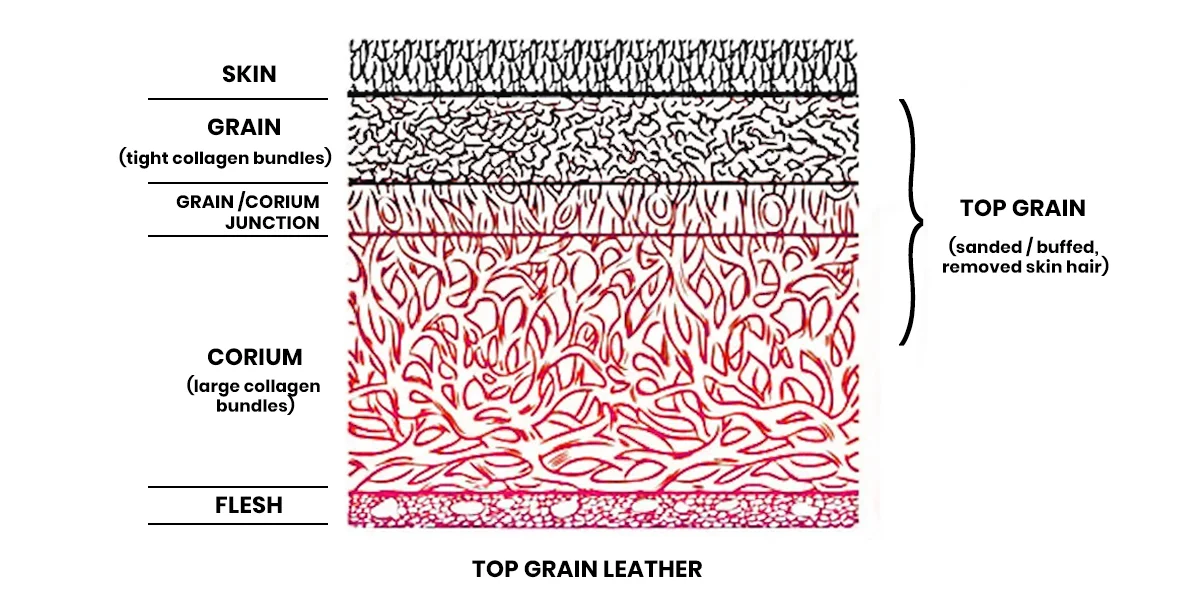
When it comes to top-grain leather, note that it’s taken from the top layer of the hide. You may have seen marks or scars on leather – these are removed by sanding. This process makes the leather neat and smooth, making it ideal for various products.
Although top grain is well suited for daily use, it still gives off its natural strength during sanding. Still, it’s a great choice if you like smooth men’s leather jackets, wallets, or bags.
Full-grain leather is considered the highest quality due to its minimal processing, making it the best choice for long-term use.
What Is Full-Grain Leather?

To answer what full-grain leather is: it’s the strongest type of leather and is present in its natural form. It’s also from the top layer, but without sanding. This leaves it with scars and lines, telling its adventurous story.
While some may find these marks rough, they’re actually proof of authentic, high-quality leather. Over time, it transforms into a unique piece that develops a special character called patina. Oftentimes used in high-quality essentials, including men’s leather shoes and premium leather bags.
Top Grain vs Full Grain: Side-by-Side Comparison
| Feature | Top Grain Leather | Full Grain Leather |
| Finish | Made smooth by sanding | Natural, keeps all marks and texture |
| Durability | Strong, but not as long-lasting as full grain | Very strong and lasts a long time |
| Cost | Less expensive | More expensive because it’s top quality |
| Aging Process | Looks the same over time | Changes and gets a cool patina |
| Common Uses | Leather jackets, shoes, bags | Fancy bags, strong shoes, luxury chairs |
Which Is Better: Top Grain or Full Grain?
When it comes down to top grain leather vs full grain leather, know that neither of them is really “better” than the other. That’s because it totally depends on what you’re looking for.
Full-grain leather is known for being exceptionally durable and looks even better as it ages. Nothing can beat that. So if you want something that’s strong and transforms with time while keeping its imperfections, full-grain leather would be a great pick for you. It’s great for essentials that need to last a long time, like leather bags or high-quality shoes.
Top grain leather has a clean, more polished look. If you want a clothing item that’s easier to work with and has a smooth, refined texture, go for it. It’s also pretty tough, making it an ideal choice for leather jackets or accessories where style matters more.
How to Identify Full Grain and Top Grain Leather?

At first, it might feel impossible to distinguish full grain vs top grain leather, but once you get a hold of what sets them apart, it gets easy. This is how you can identify them:
| Properties | Full Grain | Top Grain |
| For Appearance | Keeps all the scars, marks, and raw texture as they are | Goes through the sanding process for a smoother surface |
| Smell | Has a natural, stronger scent for its minimal processing | Has more “manufactured” smell due to more processes involved |
| Touch | It will feel more rugged and thicker when you run your finger over it | Has a softer, more flexible touch |
| Durability | Extremely durable in comparison and gets better with time | Also sturdy and matures beautifully, but not as much as the competitor |
Bonded leather is often used for more affordable items like furniture and accessories. While not as durable as full-grain, they can still last a long time with proper care.
Conclusion
Now that you have learned the basics, it’s time to make a lasting investment. Ask yourself what fits your style and needs. If you want a leather that tells a story, go for full grain. Top grain is also a great choice if you love a sleek, smooth finish for your wardrobe.
Either way, you’ll get something made to last and something that matters. Because whatever you choose, it will become your lifestyle. Once you touch them and see how they wear, you’ll know which one fits your style and needs best.
Frequently Asked Questions
Whether it’s top grain or full grain, both are great choices for women’s leather jackets, depending on the look and feel you’re going for. If you want an outerwear that’s sturdy and has natural appeal, full-grain will suffice. For a pliable, more refined appearance, top grain should be your priority.
Yes, full-grain leather can get scratched if not properly cared for. Keep it away from sharp objects like needles, pins, keys, and even your pet’s claws. Besides, if it gets scratched, it can be repaired with little maintenance.
Absolutely! Top grain is a strong by-product sourced from the top layer of animal hide that lasts a long time. And with proper care, it can become a smart investment item.


